European Food Safety Authority
Asking for a Friend.
A friend who enjoys a Nespresso… or three… before the Coke Zero starts to flow.
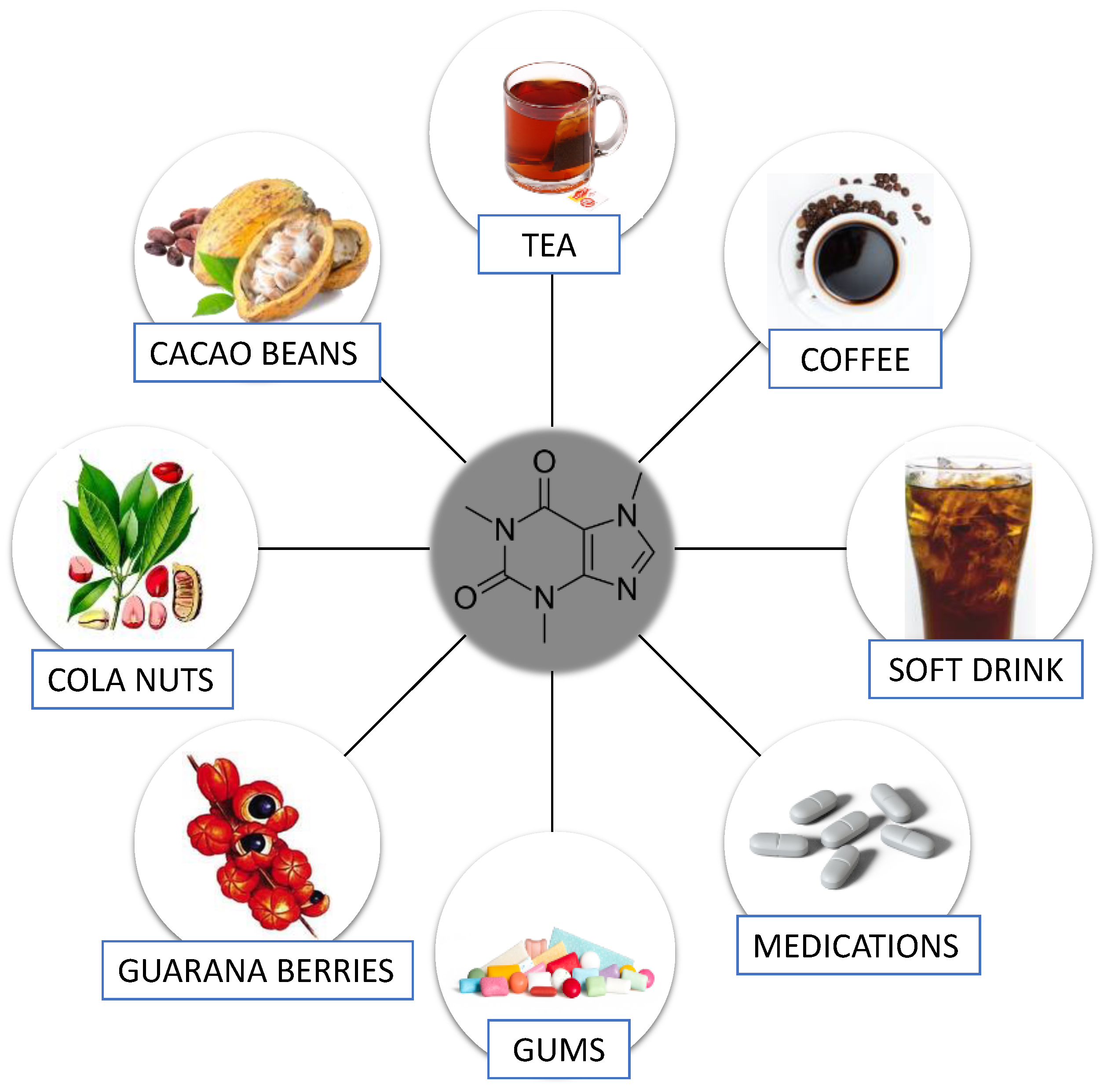
Caffeine is the most widely consumed psychoactive drug on Earth. That’s not hyperbole — that’s the scientific consensus. According to one comprehensive review:
“Caffeine is the most widely consumed psychoactive drug in the world.”
So how much of this stuff is actually good for us? And how much is just our adrenal glands filing HR complaints?
Let’s dig in.
☕️ The Real Question: Where’s the Line?
Most health agencies land on consistent number:
Up to 400mg/day is considered safe for most healthy adults.
That’s roughly:
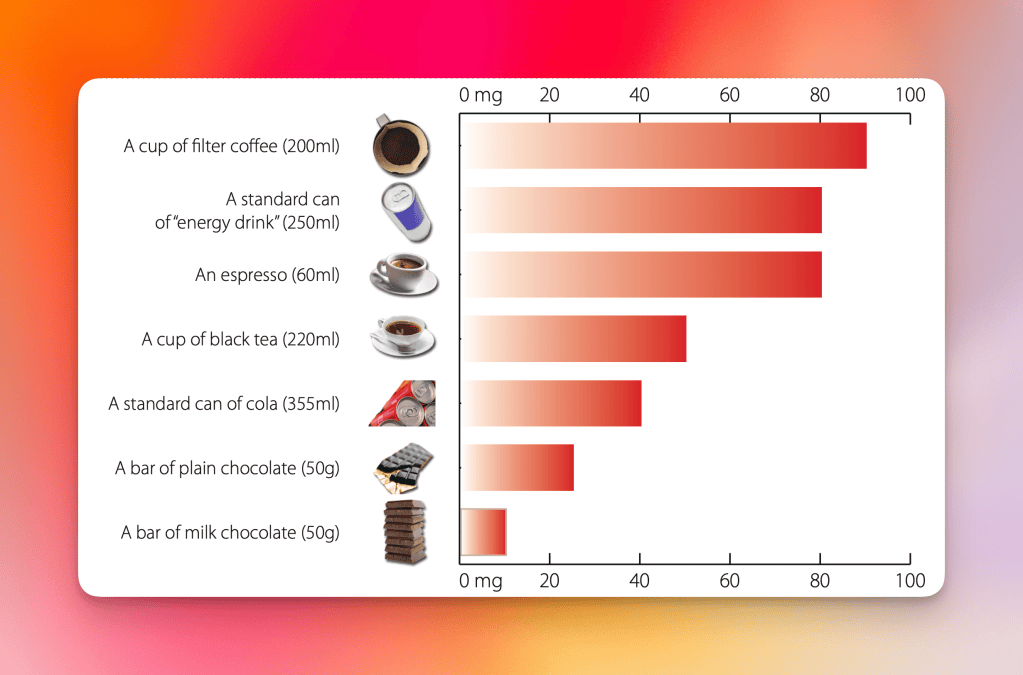
- 4–5 cups of coffee
- 2 energy drinks
- 8–10 cans of soda
- …or one “I’m a founder and this is how I cope” morning.
The European Food Safety Authority put it bluntly:
“Intakes up to 400mg per day consumed throughout the day do not raise safety concerns for healthy adults in the general population except pregnant women.”
A major systematic review came to the same conclusion:
“Consumption of up to 400 mg caffeine/day in healthy adults is not associated with overt, adverse cardiovascular, behavioral, reproductive, acute, or bone status effects.”
So that’s the grown-up answer.
But the story gets more interesting when you go beyond “average adult.”
🧡 When Caffeine Starts Pushing Back
A 2024 study from the American College of Cardiology found that chronic high-dose intake — anything over 400mg/day — can start tipping the scales:
“Drinking over 400 mg of caffeine per day on most days of the week could increase the susceptibility of otherwise healthy individuals to cardiovascular disease.”
Participants who consumed more than 600mg/day had “significantly elevated heart rates and blood pressure after five minutes of rest.”
Translation: your body keeps receipts.
🧠 For Your Brain, Caffeine Is Both Hero and Chaos Gremlin
Some research paints caffeine as a quite neuroprotective ally:
A 2024 pharmacology review highlights caffeine’s possible positive effects:
“Studies indicated that caffeine exhibits neuroprotective properties, potentially serving as a preventive measure against the onset of neurodegenerative conditions such as Alzheimer’s and Parkinson’s disease.”
But there’s a catch.
In a 2021 review, “Caffeine as a Factor Influencing the Functioning of the Human Body — Friend or Foe?” we see some clarification to the protective claims:
- Benefits are dose-dependent
- Effects vary wildly by age, sex, genetics, and health
- Children, adolescents, the elderly, and those with hypertension are more susceptible to negative effects
In other words: your mileage may vary… a lot.
😵💫 What Too Much Caffeine Looks Like in Real Life
The Caffeine Toxicity entry from StatPearls lays out the symptoms of overdoing it:
- Tachycardia
- Tremors
- Insomnia
- Nausea
- Anxiety
- In extreme cases, seizures and arrhythmias (usually from powders or supplements)
And the scary one:
“Lethal doses of caffeine have been reported at blood concentrations of 80 to 100 μg/mL, which can result from ingesting approximately 10 g or more of caffeine.”
Don’t panic — you would need to drink ~100 cups of coffee back to back, which your GI tract would veto long before your heart did.
But don’t go taking a bunch of NoDoz either. Not that I ever did that at a High School speech and drama meet in Montana from some pills you got at a gas station. Definitely not. 🤢
🥤 We’re Consuming More Caffeine Than Ever
A 2025 analysis of U.S. consumption patterns found:
- 69% of Americans have at least one caffeinated beverage daily
- Average intake: 210 mg/day
- 90th percentile intake: 520 mg/day (so… many of us are well over)
- Coffee accounts for 69% of national caffeine intake
If you feel like the whole country is living in a low-level state of vibration, this is why.
⏰ Timing Matters More Than I Thought
Something that surprised me when I was digging into this, was that when you drink coffee changes its long-term effects on your health.
A 2025 study of 40,725 Americans found:
“The morning-type pattern, rather than the all-day-type pattern, was significantly associated with lower risks of all-cause and cardiovascular disease-specific mortality as compared with non-coffee drinking.”
So, the “all-day” pattern — the afternoon Nespressos and subsequent Coke Zero — isn’t associated with the same benefits.
🧒 What About Teens?
As a parent I wonder about whether I should let my kid start to dabble with caffeine. She’s not into things that are too bubbly or sweet. She prefers water and milk over juice and soda.
I have a feeling as she gets older, she’ll change her ways. So I checked into it and there’s an editorial specifically on the topic: How Much Caffeine is Too Much for Young Adolescents?
- Recommended max: 2.5 mg/kg/day (100–175 mg/day for most teens)
- Exceeding this is linked to sleep disruption, irritability, nervousness, GI issues, and heart symptoms
And yes — energy drinks have been linked to hospitalizations and even deaths in youth.
“Researchers have reported that excessive caffeine intake by adolescents has been associated with a number of detrimental health effects such as nervousness, irritability, nausea, cardiovascular symptoms, sleep impairment, osteoporosis, and gastric ulcers. Recently, excessive use of energy drinks has been linked to deaths in the United States and Canada.”
❤️🔥 So… How much Is Too Much For Me?…I Mean, You
Here’s what I can tell from the evidence:
You’re likely fine if…
- You stay under 400 mg/day
- You drink most caffeine in the morning
- You’re not mixing caffeine with stimulant supplements
- You’re sleeping well
You may want to dial back if…
- You consistently exceed 400–500 mg/day
- You’re noticing anxiety, heart palpitations, or sleep disruption
- You’re like me and you drink caffeine all day long
- You’re leaning on energy drinks instead of coffee or tea
You should be cautious if…
- You’re pregnant (limit: 200–300 mg/day)
- You have hypertension
- You’re a teen
- You’re relying on concentrated caffeine powders or pills
☕️ My “Asking for a Friend” Reality Check
Look, I love caffeine. I love coffee culture. I love the ritual.
But going through these papers looking for quotes and evidence showed me what I probably knew already:
“Maybe I should slow down on the caffeine intake.”
Not because caffeine is dangerous — it’s not, in normal amounts. But, because the evidence makes two things clear:
- The benefits come from morning consumption
- The downsides come from chasing the buzz all day
So, I’m going to experiment with a couple of rules:
- Front-load the caffeine, taper the day
- 400mg max — none after noon
- Drink more water
Let’s not pretend I want to completely cut out caffeine from my life, but I tend to follow evidence when making decisions and I find that when I make those decisions publicly, I stick with them.
Sources:
- Temple JL, et al. (2017) The Safety of Ingested Caffeine: A Comprehensive Review. Front. Psychiatry 8:80. doi: https://doi.org/10.3389/fpsyt.2017.00080
- EFSA Panel on Dietetic Products, Nutrition and Allergies (NDA). Scientific opinion on the safety of caffeine. EFSA J. 2015, 13, 4102.
- Daniele Wikoff, et al., Systematic review of the potential adverse effects of caffeine consumption in healthy adults, pregnant women, adolescents, and children. Food and Chemical Toxicology, Volume 109, Part 1, 2017, Pages 585–648, ISSN 0278–6915, https://doi.org/10.1016/j.fct.2017.04.002
- New Study Finds Chronic High Caffeine Consumption May Heighten Risk for Cardiovascular Disease — assumed Effects of Long-Term Caffeine Consumption Recovery of Heart Rate and Blood Pressure to Baseline Levels: A Cross-Sectional Study from Nency Kagathara et al. (couldn’t find the study published yet)
- Vundrala Sumedha Reddy, et al., Pharmacology of caffeine and its effects on the human body, European Journal of Medicinal Chemistry Reports, Volume 10, 2024, 100138, ISSN 2772–4174, https://doi.org/10.1016/j.ejmcr.2024.100138.
- Rodak, K.; Kokot, I.; Kratz, E.M. Caffeine as a Factor Influencing the Functioning of the Human Body — Friend or Foe? Nutrients 2021, 13, 3088. https://doi.org/10.3390/nu13093088
- Murray A, Traylor J. Caffeine Toxicity. [Updated 2025 Feb 6]. In: StatPearls [Internet]. Treasure Island (FL): StatPearls Publishing; 2025 Jan-. Available from: https://www.ncbi.nlm.nih.gov/books/NBK532910/
- Diane C. Mitchell, et al., An update on beverage consumption patterns and caffeine intakes in a representative sample of the US population, Food and Chemical Toxicology, Volume 196, 2025, 115237, ISSN 0278–6915, https://doi.org/10.1016/j.fct.2025.115237
- Xuan Wang, et al., Coffee drinking timing and mortality in US adults, European Heart Journal, Volume 46, Issue 8, 21 February 2025, Pages 749–759, https://doi.org/10.1093/eurheartj/ehae871
- Cho HW. How Much Caffeine is Too Much for Young Adolescents?. Osong Public Health Res Perspect. 2018;9(6):287–288.

Leave a Reply